
What, Why, and How: 6 Ed Tech Tools that Will Redefine Learning in 2026
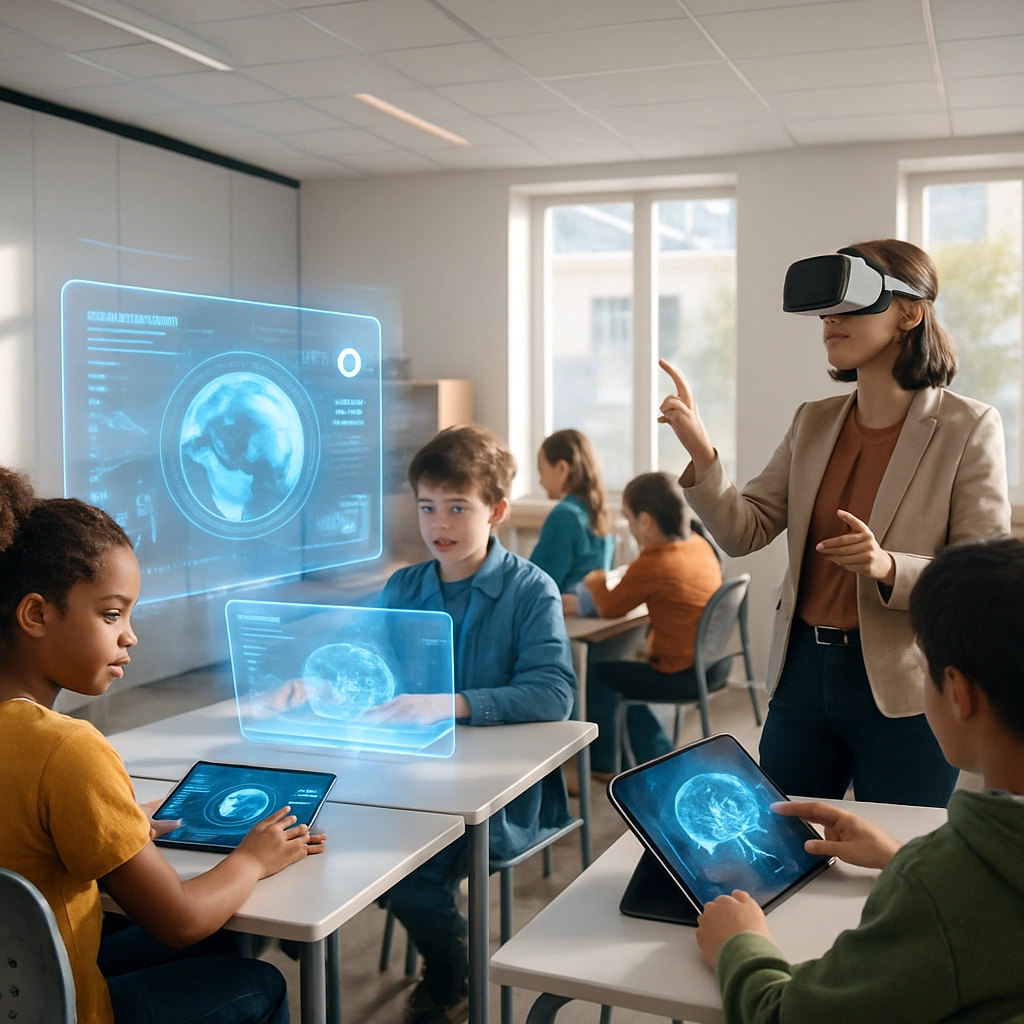
What if the classroom of 2026 looks nothing like the one you remember? What if the tools that once seemed like futuristic luxuries—artificial intelligence, virtual reality, and adaptive learning systems—have become as common as the whiteboard? Why is it that some schools are already leaping ahead while others lag behind, and what exactly separates a transformative tech tool from a passing fad? Most importantly, how can you, whether you're a teacher, administrator, or parent, ensure that you’re not only keeping up with these changes but using them to truly empower the next generation of learners? These are the questions that drive the most important conversations in education today. And in this article, we will dive deep into the six ed tech tools that are set to redefine the learning experience in 2026, based on insights from leading educational experts at Cult of Pedagogy.
1. The Rise of the AI-Powered Personal Tutor: Beyond the Chatbot
We’ve all heard of chatbots, but the artificial intelligence tools set to dominate 2026 are a quantum leap forward. These aren't just programs that provide pre-written answers; they are sophisticated, adaptive systems that act as a one-on-one personal tutor for every single student. The what is simple: they are AI platforms that can generate unique practice problems, offer real-time feedback, and explain concepts in multiple ways until something clicks. The why is even more compelling: because they remove the one-size-fits-all constraint, these tools directly address the diverse learning speeds and styles in any classroom. The how involves these systems continually analyzing a student’s responses—not just for correctness, but for their process, their hesitation, and their approach—to build a dynamic model of their understanding.
Consider the practical application in a high school algebra class. A student named Maria struggles with quadratic equations. Instead of waiting for the teacher to have a free moment, Maria’s AI tutor immediately recognizes her error pattern and shifts its instruction. It shows her a visual, interactive graph instead of a formula, then provides three new problems tailored to that visual approach. Meanwhile, another student, David, who aced the same concept, is automatically given a challenging, open-ended problem about optimizing area to keep him engaged. The teacher is not replaced; instead, they are freed up to work with small groups, provide emotional support, and plan rich project-based activities. In 2026, this isn't a fantasy; it's a practical reality that's already emerging in classrooms, promising to level the playing field and make personalized learning not just a buzzword, but a daily fact of life.
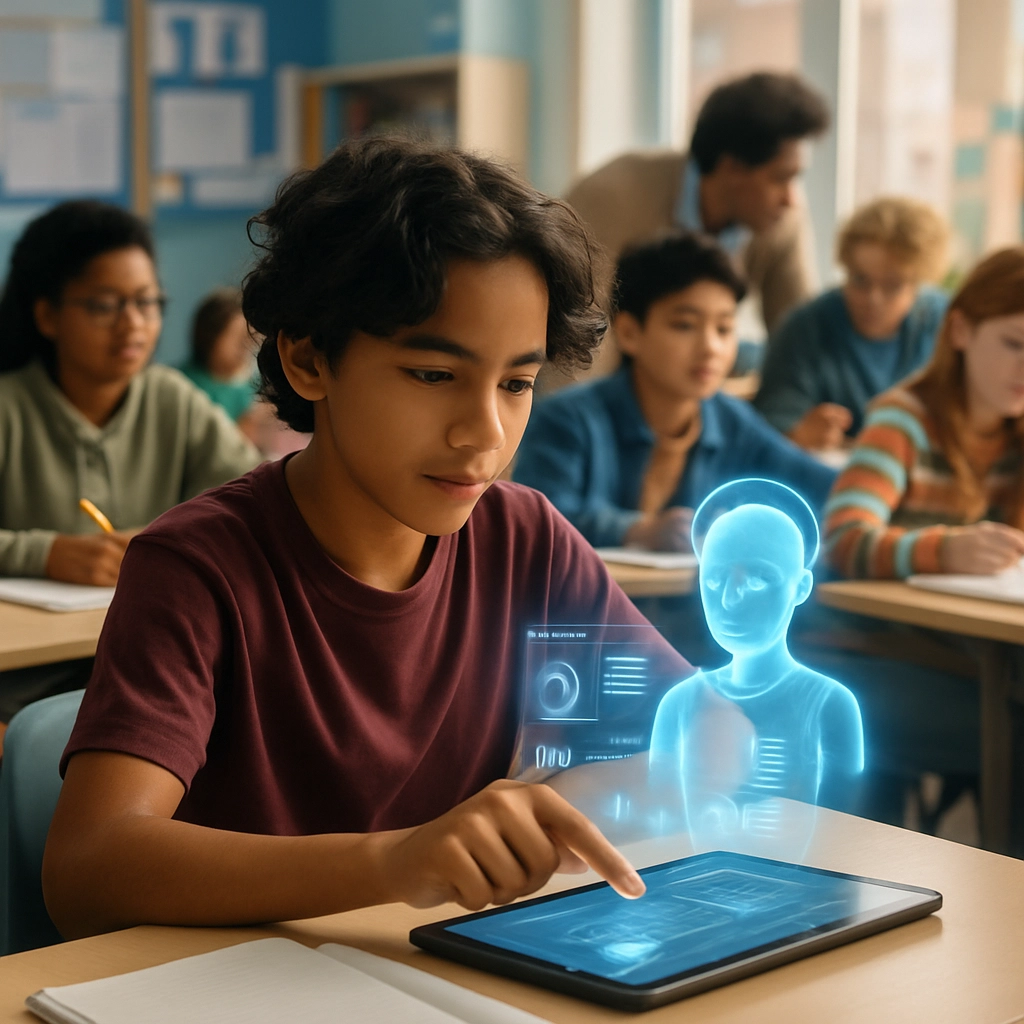
This shift is a fundamental change in the pedagogy. The traditional model, where a teacher lectures and then assigns homework, is inverted. In this new paradigm, the initial content delivery can be handled by the AI at each student’s own pace, and class time is transformed into a dynamic workshop for application, collaboration, and problem-solving. The result is not just better test scores, but a deeper, more durable understanding of the material.
2. Immersive Learning Worlds: Where Virtual Reality Gets Practical
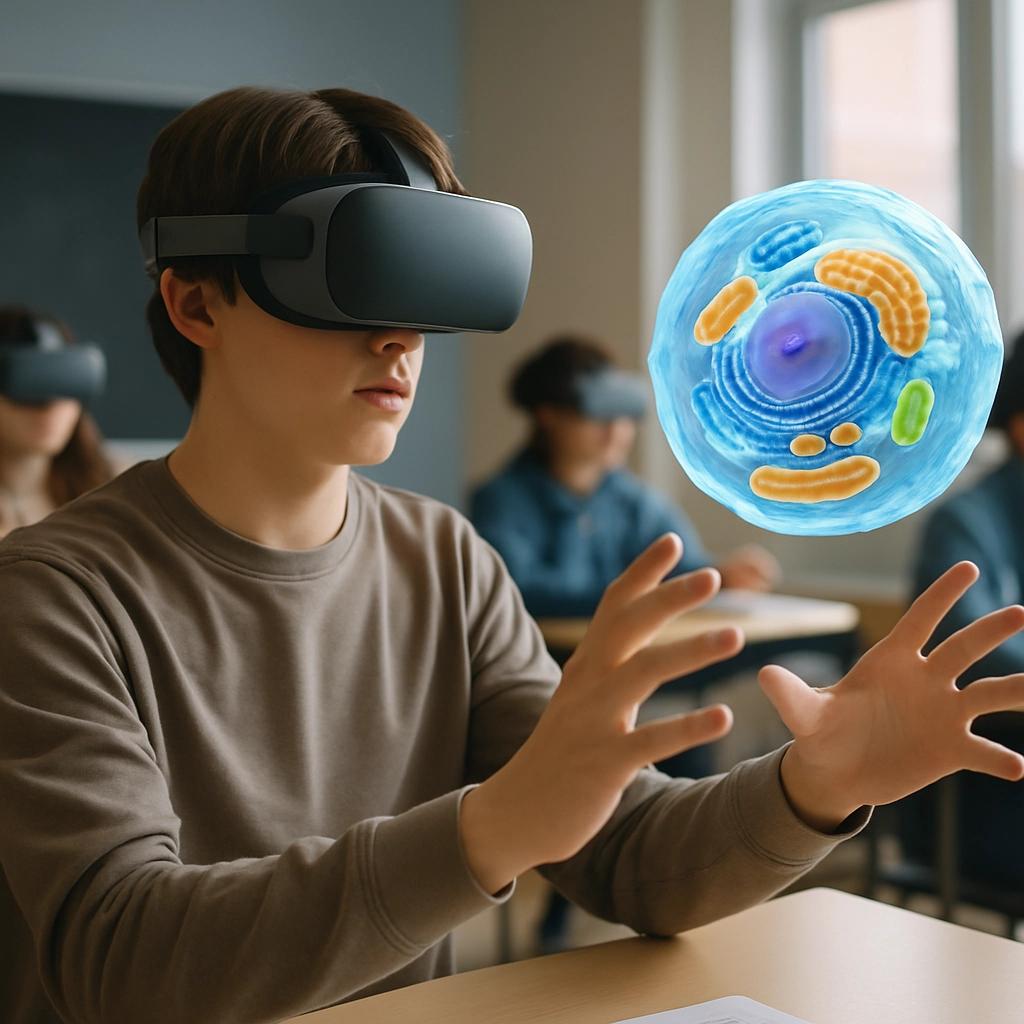
The next tool is not just a single device, but an entire ecosystem: Immersive Learning Worlds. We’re moving beyond the clunky VR headsets of yesteryear to streamlined, wireless, and collaborative virtual spaces. The what is an environment where students can explore the human bloodstream, walk through ancient Rome, or conduct chemistry experiments without risk—all in fully immersive 3D. The why is grounded in the science of learning; our brains are wired to remember vivid, emotional, and kinesthetic experiences far better than abstract text. The how is through a mix of augmented reality (AR) overlays and virtual reality (VR) worlds, which are becoming more affordable and easier to manage for schools.
Imagine a science class studying cellular biology. Instead of looking at a static diagram, every student puts on a lightweight headset and finds themselves swimming inside a giant, beating cell. They can grab a mitochondrion, rotate it, and see its inner membrane and cristae up close. They can watch the process of protein synthesis as a kinetic, visual performance. Then, the class can collectively disassemble a ribosome and rebuild it. This is not a distant future; it’s the kind of experience that pilot programs are already implementing. The practical application extends beyond science. In history, students could walk through a digital recreation of a Civil War battlefield, witnessing the strategies and conditions as they were, not just reading about them. This isn't just about 'fun'; it's about creating a lasting, powerful memory that anchors learning for years.
3. The Power of the Adaptive Learning Platform: A Map for Every Mind
Related to the personal tutor, but distinct in its application, is the Adaptive Learning Platform. If AI is the brain, this is the body. It's a comprehensive system that not only delivers content but also automatically adjusts the entire curriculum path for a student based on their performance. The what is a software platform that acts as a personalized map, determining which concepts a student needs to explore first, what order to take them in, and where to interject additional practice. The why is the significant and persistent problem of learning gaps. A student who struggles with fractions in fifth grade will almost certainly hit a wall in algebra in eighth grade. This platform identifies that gap immediately and works to fill it. The how is a sophisticated algorithm that constantly recalculates the student's next best step, whether that's reviewing old material, moving forward, or taking a side path for enrichment.
In a real-world scenario, consider a middle school math class using an adaptive platform. The teacher assigns a unit on surface area and volume. The system’s dashboard shows her a network map of her 30 students. John has mastered the core concepts and is shown moving into advanced 3D modeling. Sarah is struggling with the concept of an area, so the platform immediately sends her to a short, visually rich lesson on that foundational concept before allowing her to continue. The teacher no longer has to rely on a single lesson for the whole class; she can see who is ready to move on and who needs help—and the platform has already taken the initial steps to help. This tool isn't just about technology; it's about a new philosophy of education that is responsive, flexible, and relentlessly focused on mastery rather than mere pacing.
The power of this approach is it provides a safety net that catches students before they fall too far behind. It also liberates the teacher from the exhausting task of creating multiple lesson plans for different ability levels, giving them more time to provide human feedback, encouragement, and mentorship.

4. Collaborative and Interactive Smart Content: The Digital Evolution of the Textbook
The static, heavy textbook is on its last legs. Its successor is Collaborative and Interactive Smart Content. This isn't just a PDF or an ebook; it's a living, breathing digital document that students can annotate, highlight, share, and even remix in real time. The what is a digital learning object that includes text, video, interactive simulations, and embedded assessments, all seamlessly connected and navigable. The why is to address student engagement. Interactive content is inherently more engaging than static text. The how is through platforms that support collaboration and rich media, allowing a teacher to build a lesson that is a web of resources rather than a linear narrative.
Take a history class studying the causes of World War I, for example. The primary 'textbook' is a shared digital document. The article on the assassination at Sarajevo is hyperlinked to a short documentary clip. A comment in the margin from a student asks a question, and another student responds with a link to a primary source letter from a soldier. The teacher can see the entire conversation unfolding and jump in to correct a misconception or add a deeper layer of context. The students are not passively reading; they are actively constructing knowledge, developing critical thinking skills, and practicing digital citizenship. This tool turns the classroom from a 'broadcast' model into a 'network' model, which more closely mirrors the collaborative and connected nature of the modern professional world.
5. Gamification and Game-Based Learning: The Art of Motivation
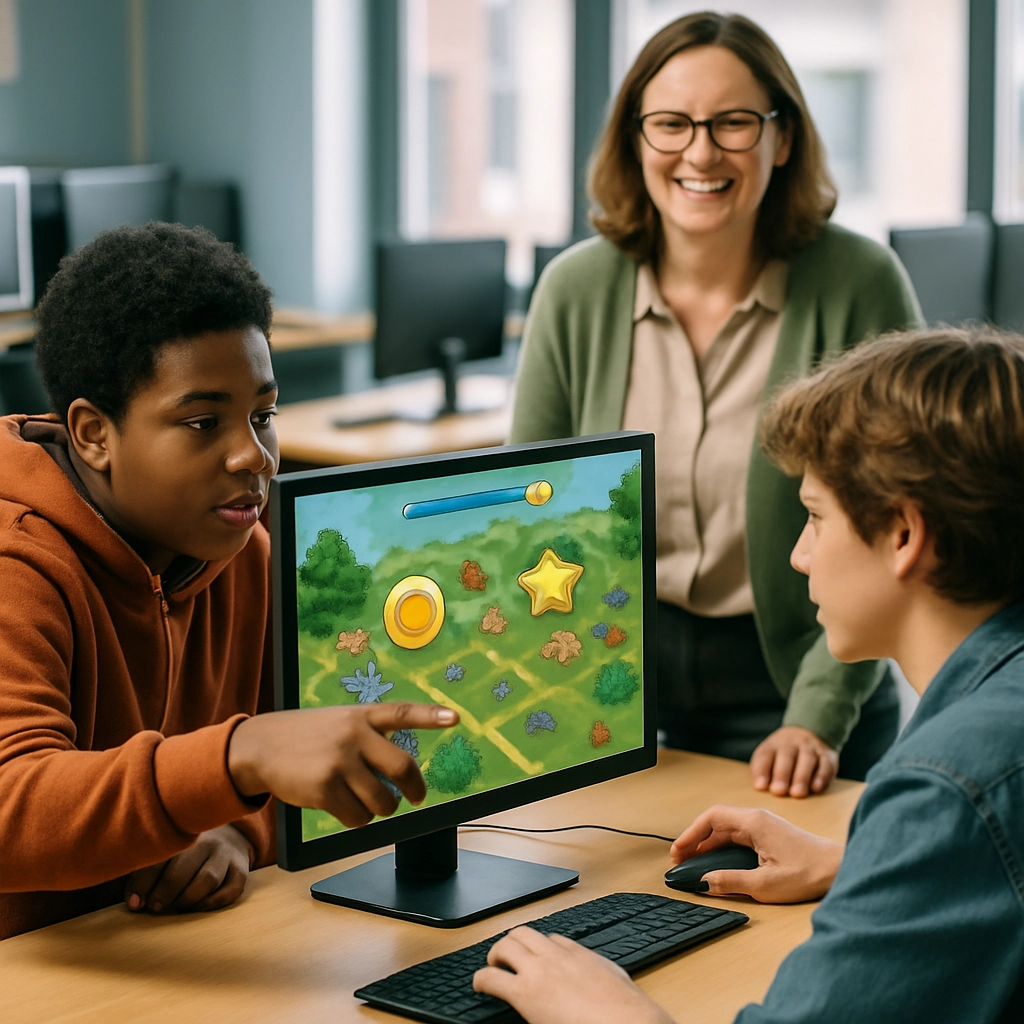
We’ve all seen the power of video games to hold a child's attention for hours. The next tool, Gamification and Game-Based Learning, is the strategic application of game design elements—points, levels, badges, competition, and storytelling—to the educational context. The what are platforms that transform skill practice, concept review, or even entire units into a game mechanic. The why is straightforward: games are powerful motivators. They offer instant feedback, a clear sense of progression, and the psychological thrill of task completion, which is a far cry from a dry worksheet. The how can range from simple quiz apps with leaderboards to complex, narrative-driven games that require mastery of content to advance.
For instance, in a language arts class, a teacher could use a gamified platform that presents grammar rules as quests in a fantasy world. A student must correctly identify and use parts of speech to unlock a new area or gain a magical artifact. In a science classroom, students might play a game where they need to build a sustainable ecosystem, managing variables like sunlight, water, and population density based on their knowledge of biology. The teacher’s role transforms from lecturer to game master, facilitating the experience and encouraging students to make connections between the game’s abstract challenges and the real-world concepts beneath them. This approach not only increases engagement but also provides a risk-free environment for failure, where students are encouraged to try again, learn from mistakes, and ultimately persevere—a skill that is invaluable in life.
6. Seamless and Ubiquitous Learning: The Ubiquitous Mobile Device
The final tool isn't a new device, but a new philosophy that every student should have a device in their pocket: the Seamless and Ubiquitous Learning framework. The what is the integration of the smartphone or tablet as a learning device, not as a distraction, but as a connection to the vast expanse of human knowledge and a tool for creation. The why is that learning today is no longer confined to the four walls of a classroom. It happens in the morning on the bus, in the afternoon at home, and on a family vacation. The how is through a school culture that embraces the use of mobile devices in the classroom, combined with digital tools that enable learning to happen anywhere. This isn't about replacing teachers; it’s about expanding the classroom’s reach.
A practical application would be a field trip to a local museum. Instead of taking a bus and spending hours walking around, students use their school-issued tablets and an AR app to scan an artifact, which brings up a detailed, interactive 3D model, a 30-second video, and an audio explanation of its historical significance. Back in the classroom, they can compile these digital memories into a collaborative presentation. Or, consider a student who is absent from school. With a ubiquitous learning platform, they can access the day's lesson, participate in a live discussion via video, and submit assignments without missing a beat. This approach empowers students to become independent, self-directed learners who understand that their education is a lifelong journey, not just a destination.
In 2026, these six tools are not isolated novelties; they are part of a converging ecosystem. The AI tutor informs the adaptive platform, which is delivered through smart content, which is gamified for engagement, all accessible through a ubiquitous mobile device. For educators, the question is no longer 'should we use these tools?' but 'how can we use them effectively and equitably to unlock the full potential of every student?' The answer lies in thoughtful implementation, professional development, and a firm belief that technology is a powerful amplifier of great teaching—not a substitute for it.
As we stand on the brink of this new frontier, the opportunities are immense. The future of education is not about the technology itself, but about what it allows us to do: to personalize, engage, and empower. The tools are ready. The question is, are we?