How to Choose the Perfect Book Series for 3rd Graders: A Parent's Guide to Unlocking a Love for Reading
What makes a third grader pick up a book and never want to put it down? Why do some series become the absolute favorites that they talk about for weeks? How can you, as a parent or educator, navigate the vast ocean of children's literature to find the series that will not only entertain but also build essential reading skills? This article answers those burning questions, offering a deep dive into the world of book series perfect for this pivotal age.
Third grade is a magical turning point in a child's literacy journey. It's the moment when they transition from 'learning to read' to 'reading to learn.' Suddenly, books are no longer just about sounding out words; they are portals to new worlds, sources of complex emotions, and reservoirs of knowledge. Choosing the right series at this stage can ignite a lifelong passion, while the wrong choice can lead to frustration. Below, we explore how to harness this enthusiasm with curated selections that promote independence, critical thinking, and sheer joy.
Understanding the 3rd Grade Reader: Why Series Are the Superpower
What exactly happens in a 3rd grader's brain when they read? At this age, cognitive development allows for greater comprehension of plot twists and character development. Their attention spans are growing, but they still crave the familiarity that series provide. Why are series so effective? They create a comfortable ecosystem where the child already knows the characters, the setting, and the rules of the world. This reduces the cognitive load of 'figuring out' a new universe, allowing the child to focus on deeper comprehension, vocabulary building, and emotional connection.
How does this look in practice? Imagine a child who struggles with reading but loves humor. If you hand them one book about a mischievous pug, they might read it. But if you introduce them to a series of seven books with the same pug, they are more likely to stick with it because the humor is consistent and they know what to expect. This repetition is not boring—it is confidence-building. Furthermore, series often increase in complexity as they progress, providing a natural scaffold for growing reading stamina. According to insights from educators, kids who read multiple books in a series often show faster improvement in reading fluency than those who hop from single title to single title.
Real-world application: Set a family goal to read one chapter of a series every night. Discuss the plot and predict what will happen next. This active engagement turns passive reading into an interactive activity, reinforcing that reading is a social and enjoyable act.
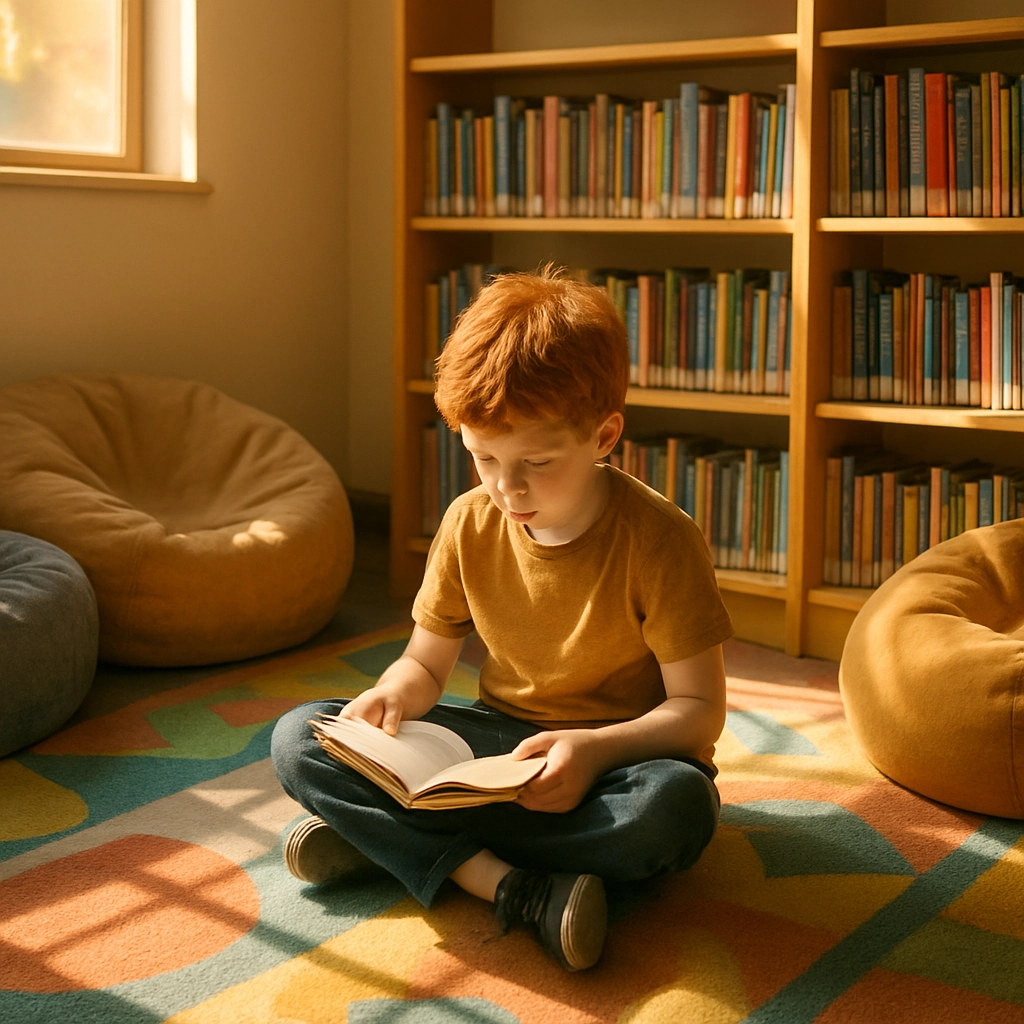
A highly illustrative image of a child discovering a beloved series: 
The Magic of Realistic Fiction: Relatable Heroes for Everyday Life
Why do third graders often gravitate towards realistic fiction? Because it mirrors their own lives. At this age, social dynamics become intricate. Issues like friendship squabbles, sibling rivalry, or facing a school challenge are paramount. Realistic fiction series offer a safe space to explore these issues without the threat of real-world consequences. Characters like Ramona Quimby or Judy Moody become trusted guides. They make mistakes, they get embarrassed, and they ultimately figure things out, modeling problem-solving skills for the reader.
The practical application of this genre is immense for social-emotional learning (SEL). When a child reads about a character who feels anxious about a school play, and then sees that character succeed despite the fear, the child is subtly learning about resilience. The key is to choose books with protagonists who are just slightly older or equal in age to the reader, making the relatability factor sky-high. Look for series that handle realistic issues with a dose of humor, ensuring the reading experience is light, not heavy-handed.
For parents, this is the perfect bridge to start conversations. After reading a chapter, ask: 'Why do you think the protagonist felt that way?' 'What would you have done in that situation?' This transforms a bedtime story into a meaningful dialogue, strengthening your relationship while boosting their literacy.
Scaling New Heights with Fantasy: Building Imagination and Vocabulary
How does fantasy benefit a 3rd grader? While realistic fiction teaches empathy, fantasy expands the imagination and introduces specialized vocabulary in a context that is highly engaging. Series like Dragon Masters or the Magic Tree House take children on journeys far beyond their neighborhood. They encounter mythical creatures, magical spells, and historical settings, which naturally introduces new words like 'ancient,' 'dragon,' 'mission,' and 'secret.' Why is this important? Vocabulary acquisition is exponential at this age, and learning words in the context of an exciting story makes them stick far better than flashcard drills.
Fantasy series often have a clear quest or mission structure. This helps third graders understand narrative arcs—the beginning, the climax, and the resolution. They learn to follow complex plots with multiple characters, which is excellent brain training. The Magic Tree House, for example, cleverly weaves historical facts into fantastical adventures, meaning your child is learning about dinosaurs, ancient Egypt, and medieval castles while being thoroughly entertained. It's education disguised as fun.
Real-world application: Use fantasy series as a springboard for creative writing. After finishing a book, encourage your child to write a short 'lost chapter' about what happens next. This reinforces comprehension and allows them to exercise their own creative muscles, making the reading experience more tangible and personal.
An illustrative image for the fantasy section: 
Graphic Novels and Hybrid Texts: Capturing the Visual Reader
What if your child is a reluctant reader who prefers screens over books? This is where the power of graphic novels and illustrated hybrids shines. Why do these formats work? They leverage the visual cortex to support the linguistic one. The pictures provide 'right there' clues that help with context encoding, allowing kids to decode unfamiliar words by looking at the expression on a character’s face or the action in the scene. This reduces reading frustration and increases speed. Series like Dog Man or Big Nate are wildly popular because they mix humor, action, and high-quality illustration into a format that feels less intimidating than a text-dense novel.
The critical difference lies in the pacing. Text-heavy novels require sustained imagination; graphic novels provide the scene. However, this is not a 'lazy' way to read. In fact, reading a graphic novel requires complex multi-modal processing—your brain must integrate the visuals with the text to extract full meaning. It's a skill in itself. For third graders, this is often the gateway drug to text-only books. By building confidence in understanding stories, they feel ready to tackle chapter books.
How to approach this? Don't dismiss graphic novels as 'not real books.' Instead, use them as a bridge. Set a boundary: 'We can check out two graphic novels, but we also need to pick one chapter book.' This creates a balanced diet of literature, catering to their current preference while expanding their horizons. It's a practical, low-stress strategy that keeps them in the habit of reading.
Another relevant image for graphic novels section: 
Practical Strategies: How to Keep the Momentum Going
How do you sustain this enthusiasm beyond the book fair or the library visit? The first step is to stop policing their choices. Let them choose what they like, even if it’s the same book they've read ten times. Rereading builds fluency and confidence. The second step is to create a dedicated reading time that is non-negotiable but relaxed—think of it as 'cozy reading hour' rather than 'mandatory quiet time.'
Another key strategy is the 'The Book Talk' method. Before starting a new series, give a teaser. Say, 'This series is about a girl who finds a magic key that unlocks zoo cages,' and leave it at that. Creating anticipation is a powerful motivator. Additionally, connect books to other media. If they love a series, check if it has an audiobook for the car or a well-reviewed movie adaptation. Consuming the story in multiple formats requires different comprehension skills and reinforces the narrative.
Building a Home Library on a Budget
How can you build this collection without breaking the bank? Use your local library often—it’s a free treasure trove. Use the 'basket method' where you fill a designated basket with 5-7 series books, letting the child pick one to start. This offers structured choice. Look for used book sales, and encourage book swaps with friends. The goal isn't ownership; it's access.
Incorporating Interactive Discussions
Why are discussions important? They help process the story. Use open-ended questions like, 'What surprised you?' or 'What would you do if you had the character's magical powers?' These discussions boost critical thinking and prove to the child that their thoughts on the book matter. Make a few blog posts or a scrapbook about the series they read as a non-digital keepsake, solidifying their identity as a reader.
An image showing the parent-child bond: 
Tailoring the Choice: What to Look For and What to Avoid
What are the hallmarks of a great 3rd grade series? Look for chapters that are short enough to finish in one sitting (5-10 minutes), characters with distinctive voices, and plots that move quickly. Vocabulary should be slightly challenging but not overwhelming—a good rule of thumb is the 'five-finger rule' where a child holds up a finger for every unknown word on a page; less than five means it's a good fit.
What should you avoid? Avoid series that are watered-down versions of teen novels, as they often contain complex themes that are inappropriate. Also, don’t force a 'classic' simply because it’s a classic if the child finds it boring; there are countless modern options that are equally rich in value. Trust your child’s taste. If they are drawn to a silly humor series, let them enjoy it; the habit of reading is more important than the perceived 'quality' of the content.
In conclusion, the right book series can be a transformative tool for a 3rd grader. It builds confidence, expands empathy, and enriches language. Whether they choose a fantasy quest, a graphic novel, or a realistic friendship saga, your role is to facilitate access, provide encouragement, and perhaps most importantly, model the joy of reading by picking up a book yourself. Start exploring new series today; you might be surprised to find the next great adventure waiting just around the corner, ready to capture your child's heart and mind.