The Myth of the Silent Multilingual Child
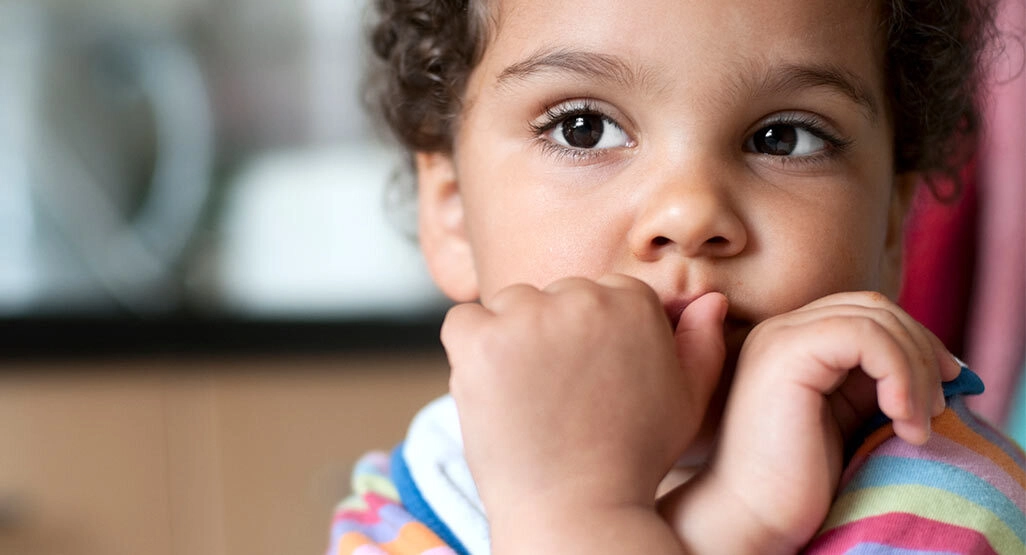
A four-year-old girl sits at an art table, holding a paintbrush frozen in mid-air. She does not paint. She does not speak. To a casual observer rushing through a packed morning routine, it looks like nothing is happening. She gets tagged as quiet, withdrawn, or perhaps behind her peers.
But look closer.
 Her shoulders gradually drop. Her eyes track the stroke of blue paint her classmate spreads across paper. She leans forward half an inch. Then comes a tiny whisper—a single word in a new language.
That is not nothing. That is early expression.
In early childhood classrooms, the fastest mistake we make is treating silence as a single, uniform state. Verbal output has become our default obsession. We treat speech as the only proof of cognitive engagement. Yet, for dual language learners, communication begins long before full sentences exit their mouths. It shows up in posture, breath, physical proximity, and eyes scanning the room. The gap between nothing happening and something starting isn't a child problem. It is an adult perception problem.
The High Stakes of Adult Misperception
Why does this matter right now? Nearly one in three children under age five in the United States lives in a home where more than one language is spoken. Multilingualism is no longer a niche demographic exception; it is our classroom baseline.
This reality lays a massive interpretive responsibility on teachers. We have to separate typical bilingual development from stress-induced quiet and true speech disorders without lumping everything into one bucket.
The risks run high on both ends.
Some dual language learners are fast-tracked into special education evaluations simply because they don't produce English sentences quickly enough. Others have genuine speech difficulties overlooked because adults write off every struggle as just a language barrier. Both mistakes stem from misinterpreting silence.
The nervous system plays a decisive role here. Emotional safety and language output are bound together. When a child faces new routines, unfamiliar cultural expectations, or physical relocation, their nervous system switches into protection mode. When safety is threatened, the brain restricts expressive speech—even while full comprehension remains totally intact. Silence is not a diagnosis. It is raw information.
Decoding the Silence: Six Different Realities
When an adult hears zero words, quick labels pop up: He's refusing to talk. She's delayed. He's just shy.
The truth? Silence takes many shapes.
Let's break it down:
- The Natural Silent Period: A well-documented, healthy phase in second language acquisition where children absorb mapping rules without speaking out loud. It can last weeks or months.
- Processing and Translation Load: Managing two language systems requires heavy mental math. A child might understand the prompt, retrieve the vocabulary, choose the language, and handle emotional stress before speaking. Silence is often a mental pause button.
- Observational Learning: Many children engage visually first. They study how peers interact, watch how routines flow, and digest context. Nonverbal participation is active participation.
- Slow-to-Warm Temperament: Some children need physical time to acclimatize to group dynamics regardless of how many languages they speak.
- Transition and Relocation Stress: Cultural dislocation and life shifts cause temporary speech regression while the body recalibrates its baseline safety.
- The Freeze Response: Under intense stress, the body enters a physiological freeze. Here, relational connection matters far more than language drills.
 From five feet away, all six of these children look identical. They are all quiet. But treating them with the exact same intervention is a recipe for failure.
Reading the Micro-Signals Before Speech Appears
Quiet children do not need faster labeling. They need more accurate seeing.
If we wait for complete spoken sentences to evaluate progress, we miss weeks of developmental breakthroughs. We need to train ourselves to spot micro-signals. Does the child move closer to a small group activity? Does their breathing settle when a predictable routine begins? Are their eyes following the teacher's gestures during storytime?
 Nonverbal participation carries huge value. When a child hand-delivers a block to a peer or mimics a song's hand motions without vocalizing, language processing is humming in the background. Seeing these tiny signals keeps us from making premature judgments that follow a child in their permanent cumulative records.
Shifting from Guesswork to Relational Safety
How do we respond when we notice a child in a prolonged quiet phase? We stop pressing for immediate speech.
Demanding spoken words from a child whose nervous system is on high alert only tightens the bottleneck. Instead, we invest in serve-and-return interactions—responding to their glances, nodding when they point, and validating their nonverbal bids for connection.
Predictable classroom routines create structural safety. When a child knows exactly what comes next, cognitive energy shifts from survival scanning to linguistic processing. Slow down your observation lens. Give the child time to process without rushing in to fill the silence with adult speech. When we adjust the environment around the child, the child's internal capacity opens up naturally.