Beyond Punishment: How to Teach Replacement Skills for Lasting Behavior Change
What if the key to transforming disruptive behavior lies not in punishment, but in teaching? Why do traditional disciplinary methods often fail to change behavior in the long term? How can we move from a reactive, punitive approach to a proactive, skill-building one that empowers students and fosters genuine growth? These are the questions that educators, parents, and counselors grapple with daily. The answer, as it turns out, is both simple and profound: we must shift our focus from merely addressing the behavior to teaching the missing skill.
This article explores the powerful concept of replacement skills—a strategy that reframes challenging behavior as a communication of unmet needs and missing competencies. Instead of asking 'How do we stop this behavior?' we ask 'What is this student trying to achieve, and what skill would help them achieve it in a more appropriate way?' This approach, championed by educators and behavior specialists, offers a more humane, effective, and sustainable path to behavior change. We will delve into the 'what', 'why', and 'how' of this transformative practice, providing practical steps for implementation.
Understanding the Core Concept: Behavior as Communication
At the heart of the replacement skills philosophy is a fundamental shift in perspective. Every behavior, even the most challenging one, serves a function. A student who constantly talks out of turn may be seeking attention. A student who shuts down and refuses to work may be avoiding a task they find overwhelming. A student who throws a tantrum when transitioning might be struggling with a change in routine. In each case, the behavior is a form of communication—an attempt to get a need met, albeit in a way that is disruptive or inappropriate.
The traditional approach to such behaviors is to apply a consequence, typically punishment, with the hope that it will deter the student from repeating the action. However, this approach often fails because it does not address the underlying need. If a student acts out to gain attention and is sent to the principal's office, they may actually receive the attention they crave (albeit negative attention). Punishment can also breed resentment, fear, and erode the student-teacher relationship, creating a cycle of negativity that makes problem behaviors worse.
The replacement skills model offers a different path. It asks us to first understand the function of the behavior. This is known as a functional behavior assessment (FBA). Once we know the 'why' behind the behavior—whether it's to get attention, escape a task, gain access to something, or meet a sensory need—we can identify the specific skill the student is lacking. This is the replacement skill: a positive, appropriate behavior that serves the same function. For example, if a student acts out to get peer attention, a replacement skill might be to teach them how to initiate a conversation or join a group appropriately. If a student refuses to work to escape a difficult task, a replacement skill might be to teach them how to ask for help or break the task into smaller steps.

Why Punishment Falls Short: The Case for Skill-Building
Why is punishment so deeply ingrained in our disciplinary systems, despite its frequent ineffectiveness? Part of the reason is tradition and speed—it feels like a quick fix. But the psychological and neurological evidence is clear: punishment can be effective in the short term (it stops the behavior momentarily), but it is often ineffective in the long term and can have harmful side effects. Punishment does not teach the student what to do instead. It only tells them what not to do. This leaves a void. A student who is punished for talking out of turn is not equipped with an alternative strategy for gaining peer connection. The need remains, and the behavior is likely to recur, perhaps in a more covert or extreme form.
Moreover, punishment can damage the relationship between the student and the adult, reducing the student's motivation to cooperate. It can also create a negative school climate, leading to increased anxiety and eroding a sense of belonging. Research consistently shows that punitive discipline, such as zero-tolerance policies and out-of-school suspensions, is associated with negative outcomes, including lower academic achievement, higher dropout rates, and increased involvement with the justice system. This is particularly true for students from marginalized backgrounds, leading to what is known as the 'school-to-prison pipeline.'
In contrast, teaching replacement skills aligns with the fundamental principles of learning. We do not expect a student to learn algebra without direct instruction, practice, and feedback. The same logic applies to social and emotional skills. If we want a student to manage their frustration without yelling, we must explicitly teach them a calm-down strategy, model it, allow them to practice it, and provide positive reinforcement when they use it. This is a more respectful and humane approach that treats students as learners rather than as problems to be controlled. It also builds self-efficacy, as students acquire valuable life skills that extend far beyond the classroom.
The Power of the Pivot: Turning Behavior from a Problem to a Teaching Moment
The first step in implementing replacement skills is to change your mindset. When a student engages in a challenging behavior, resist the urge to see it as an attack or a personal failure. Instead, view it as an opportunity to teach. This mental pivot is essential. It reframes the situation from a power struggle to a collaborative problem-solving effort.
Next, conduct a simple functional assessment. Observe the student in various settings and note: What happens directly before the behavior (the trigger)? What exactly is the behavior? What happens immediately after (the consequence that might be reinforcing the behavior)? For example, you might notice that every time you put the class into small groups, a particular student refuses to participate and begins to swing in his chair. The function might be to avoid the social and academic demands of group work. The replacement skill would then be to teach the student how to ask for a partner, how to take a specific role in the group, or how to use a simple sentence starter to contribute an idea.
Finding the Right Replacement Skill: Matching Function to Skill
Once you have identified the function, you can select an appropriate replacement skill. It's crucial that the replacement skill is equally effective at achieving the same function for the student. If a student uses aggression to get a peer to move out of their way, teaching them to say 'excuse me' is a good replacement. It gets them the same result (space) but in a socially acceptable way. If a student calls out to get your attention, teaching them to raise their hand (and ensuring you consistently acknowledge the raised hand) is a direct replacement. The replacement skill must be something the student can realistically do and must be reinforced to ensure it becomes a habit. This involves direct instruction, modeling, role-playing, and plenty of praise when the student uses the new skill, even if it's not perfect at first.
Consider the example of a student who runs out of the classroom when feeling overwhelmed. The function is to escape anxiety or a triggering situation. A replacement skill could be to teach the student to ask for a 'break' using a nonverbal signal or a pre-arranged pass. This gives the student a sense of control and a proactive way to meet their need, while keeping them in the classroom and preventing the dangerous behavior of running out. The teacher would need to practice this with the student, teach them how and when to use the signal, and reinforce its use. Over time, the student learns a self-regulation skill that is far more valuable than simply being punished for bolting.
Practical Implementation: Step-by-Step Guidance
Implementing replacement skills is a systematic process that requires patience and consistency. Here’s a step-by-step framework adapted from the insights in the article:
Step 1: Identify and Define the Behavior. Specifically describe the behavior you want to change. Instead of 'defiant,' use 'verbally refusing to follow instructions by saying 'no' and crossing arms.' This clarity will help you track progress and communicate with others.
Step 2: Determine the Function. As described above, observe to understand the 'why' behind the behavior. Is it to gain attention, escape a task, get a tangible item, or meet a sensory need? You can often infer this by looking at what the student gets or avoids.
Step 3: Choose a Replacement Skill. Brainstorm a behavior that is socially appropriate and serves the same function. Ensure it is something the student is capable of learning. If the skill is complex, break it down into smaller, teachable components.
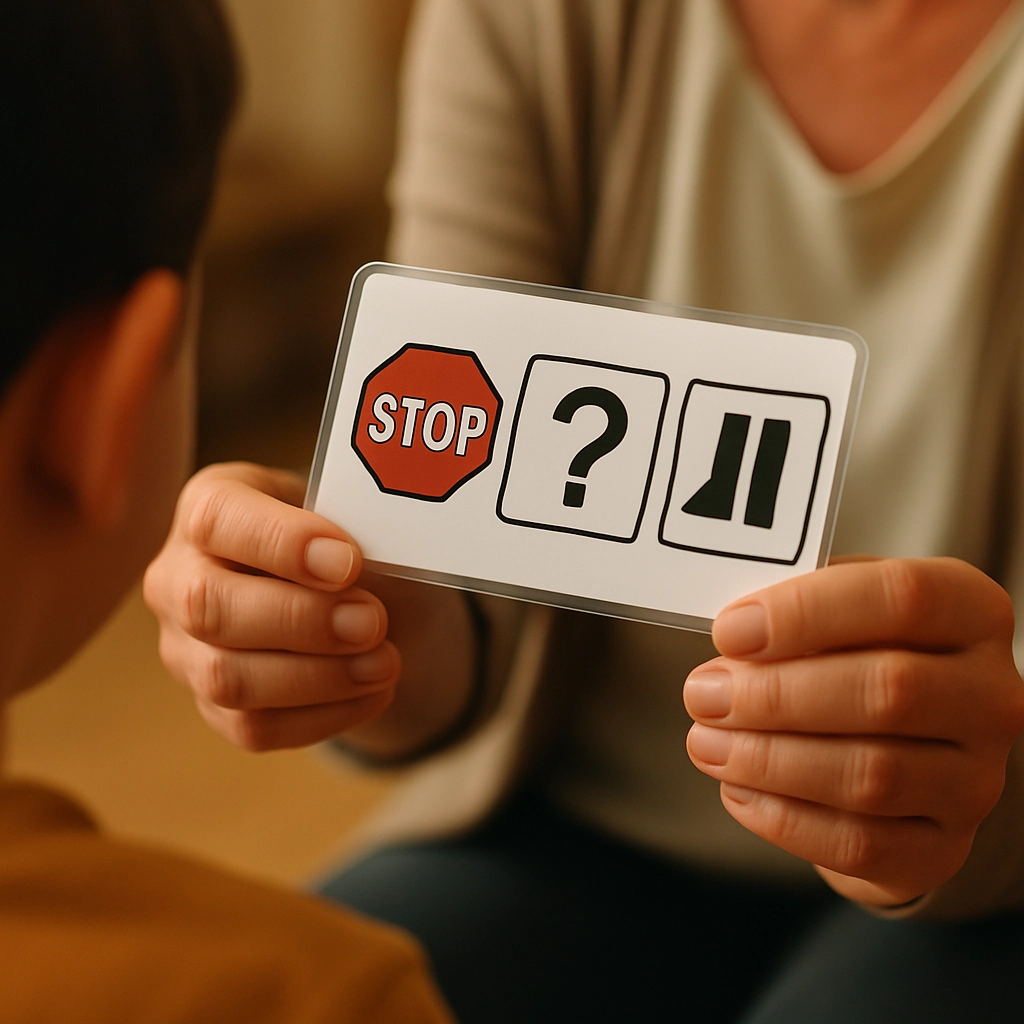
Step 4: Teach the Skill Explicitly. Do not expect the student to just 'know' how to do it. Find a calm moment to teach the skill. Use direct instruction: tell the student what you want them to do instead, model it, practice it through role-play, and provide feedback. Visual cues, social stories, and video modeling can be highly effective tools.
Step 5: Reinforce the Use of the Skill. The new behavior must be more rewarding for the student than the old one. Offer specific praise immediately when you see the student using the replacement skill. For example, 'I really like how you raised your hand and waited calmly for me to call on you. Thank you.' You might also use a token economy where the student earns points or privileges for using the skill. At the same time, ensure the old behavior no longer works. If the student calls out, do not give them attention; remind them of the replacement skill (e.g., 'Remember to raise your hand if you want to speak') and then ignore the call-out. This makes the replacement skill the most efficient and effective path to what they want.
Step 6: Be Consistent and Patient. Change takes time. Expect setbacks. The student might use the new skill sometimes and regress at other times. Consistency from all adults is crucial. Keep track of the behavior data to see if progress is being made. If not, reassess the function or the chosen replacement skill—it may not be a good match.

Real-World Applications and the Transformative Impact
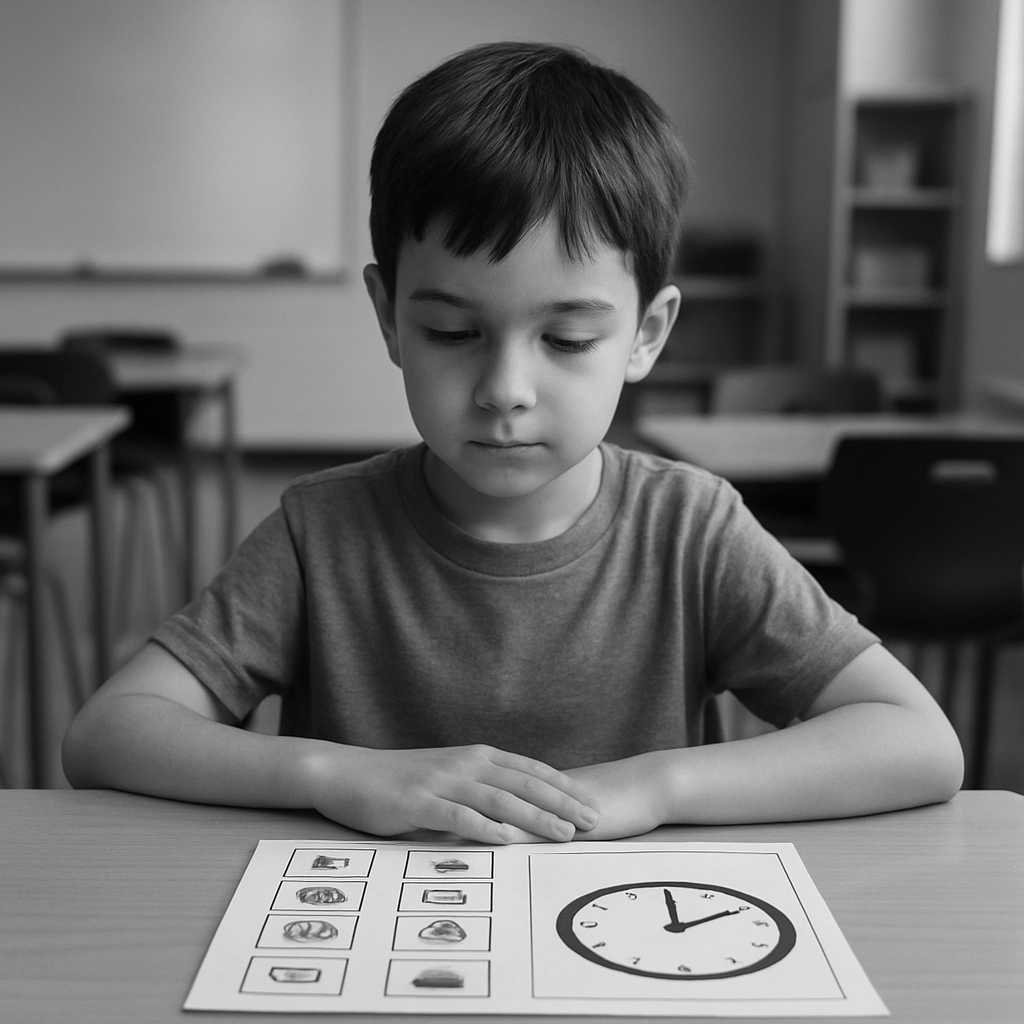
The replacement skills approach is not just theoretical; it has been successfully applied in countless classrooms and homes. Consider the case of a second-grader named Marcus who would throw himself on the floor and scream whenever he was asked to transition from a preferred activity (like free time on the tablet) to a non-preferred one (like a writing worksheet). The function of his behavior was to delay or escape the transition. The replacement skill selected was to teach Marcus to use a visual timer and a 'First-Then' board. The teacher showed him a card with a picture of a worksheet and then a picture of a small reward (like a sticker). She taught him to say, 'I need more time' and then set the timer for two extra minutes. Through practice, Marcus learned to use the timer and the 'First-Then' board. He would look at the board, see the writing task, and he knew that if he completed it, he would get the sticker. His tantrums decreased dramatically because he had a predictable, structured way to manage the transition and a clear expectation. The replacement skills did not just stop the tantrum; they gave Marcus a set of tools for managing frustration and transitions.
In another context, a high school student repeatedly made sarcastic remarks during class, leading to conflict with peers. An assessment revealed the function was to gain social status and be seen as 'funny.' The replacement skill taught was to channel that humor into appropriate participation. The teacher gave the student a specific role as 'class comedian' for a brief, structured part of the lesson, where he was encouraged to make a relevant, non-offensive joke related to the topic. He was also coached on how to make positive comments and use humor without mocking others. This not only reduced the disruptive behavior but also harnessed the student's strength, improving his relationships with both peers and the teacher.
The impact of this approach extends far beyond the individual student. When teachers adopt a replacement skills mindset, they report lower levels of stress and burnout, because they replace the exhausting cycle of correction and punishment with a more rewarding process of teaching and seeing growth. Classrooms become more positive and inclusive, with fewer disruptions and more time for learning. Students who formerly were labeled as 'problem children' can begin to see themselves as capable and successful learners. This is the ultimate goal of education: not to simply control behavior, but to equip young people with the skills they need to navigate life's challenges with confidence and integrity.
In conclusion, the path to lasting behavior change does not lie in punishment, but in understanding, empathy, and instruction. By asking 'What skill are they missing?' instead of 'How do I make them stop?', we transform our classrooms and our relationships. We move from a punitive, reactive model to a proactive, educational one. We teach students how to get their needs met in ways that are respectful to themselves and others. This is not a quick fix, but it is a profound and sustainable solution that honors the dignity of every learner.